
API languages
Native C/C++; .NET languages including C# and VB (.NET Framework 4.0 or later).
CONTROL SOFTWARE
WMX3 integrates motion, I/O, EtherCAT networking, simulation and engineering tools on a standard Windows PC.
Request WMX3 evaluation→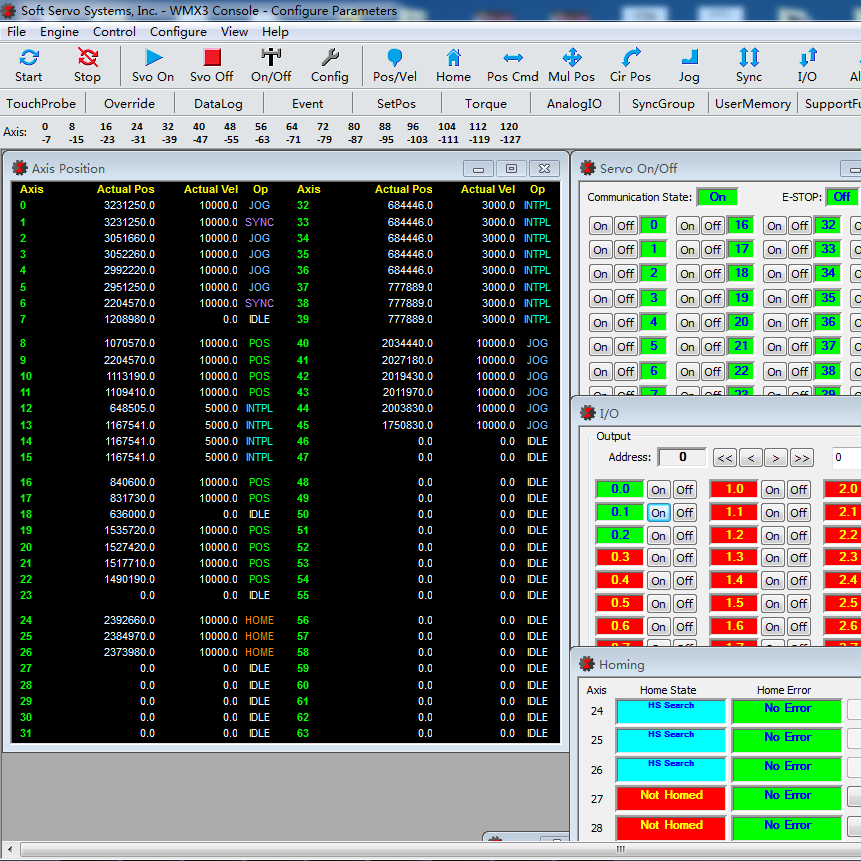
01 / OVERVIEW
WMX3 uses Softwin patented software motion-control technology to provide motion, fieldbus and engineering functions in one environment. The original product architecture connects a standard PC to distributed drives, I/O and multiple machine mechanisms.
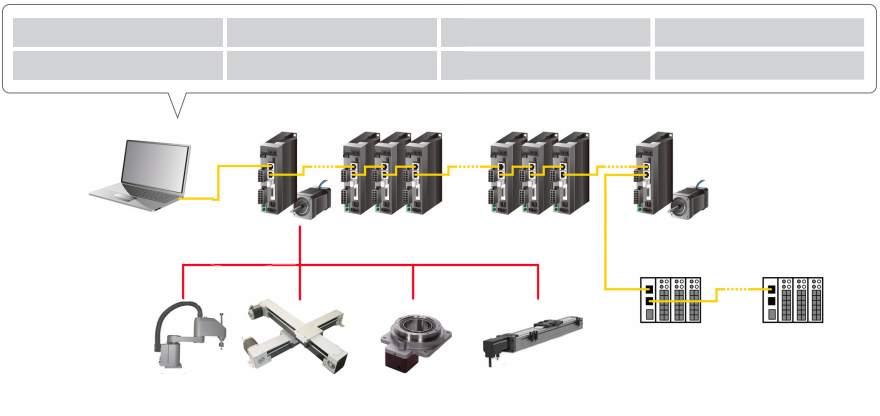
Equipment applications, engineering tools, APIs and deterministic engines share one PC while remaining separated by their execution layer.
Customer equipment-control programs and WMX3 engineering tools.
WMX3 Motion API and network-management API connect the application to control functions.
WMX3 motion engine, EtherCAT and other fieldbus engines, plus the NIC driver.
The NIC connects distributed servo/stepper drives, I/O stations and machine mechanisms.
The standard environment provides the runtime, development libraries, simulation and configuration tools needed to begin machine application development.
WMX3 and RTX installation environment
WMX3 and RTX runtime licences
Development libraries without a separate application SDK
Standard simulation without the physical machine
Network configuration and motion-analysis tools
02 / EDITIONS
The original WMX3 page distinguishes I/O, Standard and Advanced editions by the included motion modules.
| Module | Included function | I/O | Standard | Advanced |
|---|---|---|---|---|
| WMX3 Engine | System engine for initialization, termination and fieldbus communication | ● | ● | ● |
| CoreMotion | Homing, I/O, point-to-point motion, interpolation and synchronization | — | ● | ● |
| Log | Real-time recording and sampling of system, API, command and state data | — | ● | ● |
| Event | Real-time triggering of motion events controlled by the system engine | — | ● | ● |
| AdvancedMotion | Continuous motion, spline, look-ahead, path interpolation and electronic cam | — | — | ● |
| Compensation | Pitch error, backlash and 2D planar error compensation | — | — | ● |
| ApiBuffer | Buffered API execution with waits and conditional branches | — | ● | ● |
| CyclicBuffer | Periodic command buffer for user-defined trajectories | — | ● | ● |
| UserMemory | User-defined shared-memory area | — | ● | ● |
| UserDll | User-defined real-time module | — | ● | ● |
| I/O | I/O control functions | ● | ● | ● |
03 / SELECTION
The original ordering code combines software edition, axis count, Windows architecture, real-time cores, fieldbus and optional robot modules.
Selection example
W3ST008–B6R01EC–FFF–R0102–FF Reserved fields and current licence combinations should be confirmed with Softwin before ordering.
04 / CAPABILITIES
The following specification content is transcribed from the original WMX3 page so it remains readable and searchable.
05 / ENVIRONMENT
The following environment list is retained from the original product page. Confirm current software versions and hardware compatibility with Softwin before deployment.
Native C/C++; .NET languages including C# and VB (.NET Framework 4.0 or later).
Microsoft Visual Studio 2012, 2013, 2015 and 2017; C++ Builder XE7 or later; LabVIEW 2017 and 2018.
Windows 7 32/64-bit or Windows 10 64-bit Enterprise LTSC; Atom 2 GHz dual-core or higher; at least 4 GB memory.
The standard EtherCAT master supports most commercial EtherCAT servo, stepper and I/O slaves; confirm the specific device before use.
06 / TOOLS
WMX3 extends from machine and robot control to network configuration, customer real-time algorithms and trajectory analysis.
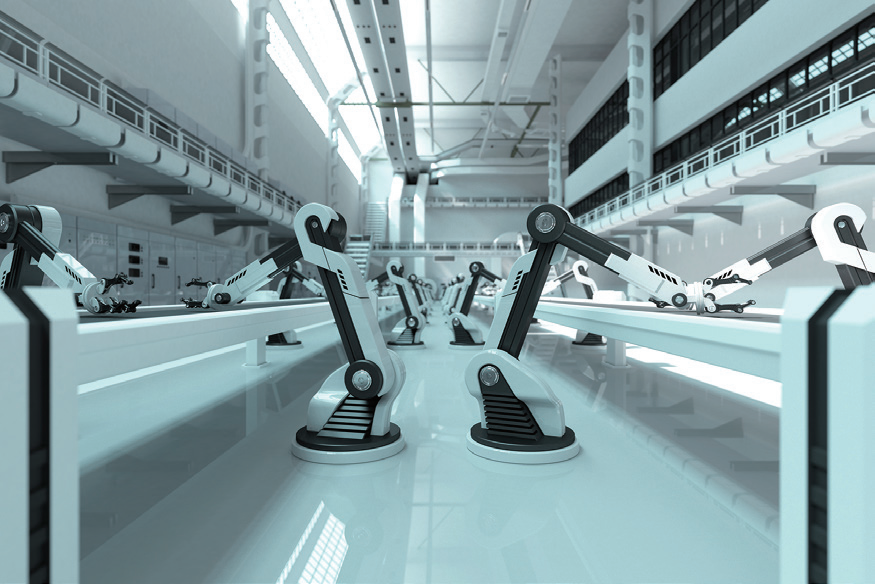
Provides forward and inverse kinematics for industrial robots, closed mechanisms and link offsets, synchronizes multiple robots with automation equipment and supports RBC robot-language programming.
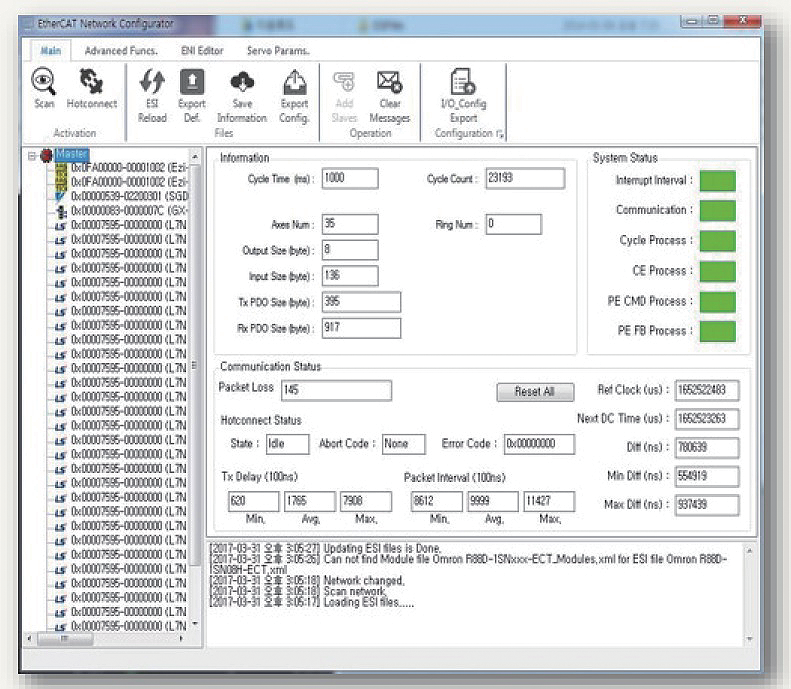
Configure communication, monitor status, transfer parameters, display topology, diagnose the EtherCAT network and analyse PC real-time performance.
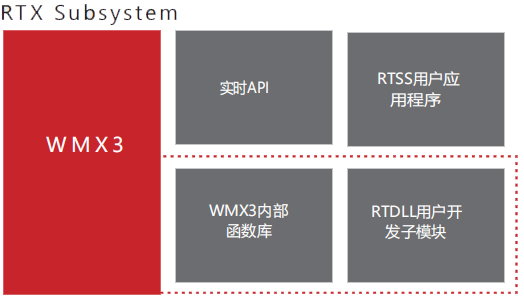
Develop customer C++ algorithms on RTX, package them as RTDLL modules and integrate them with WMX3 functions. A separate RTX SDK is required.
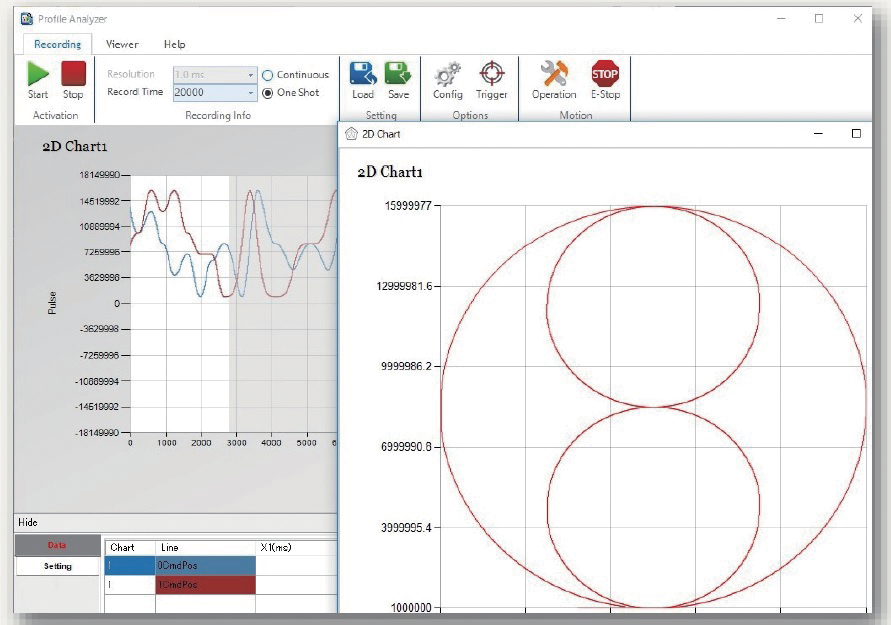
Display or record multi-axis motion in real time, control recording with triggers and analyse multi-axis interpolation trajectories.